
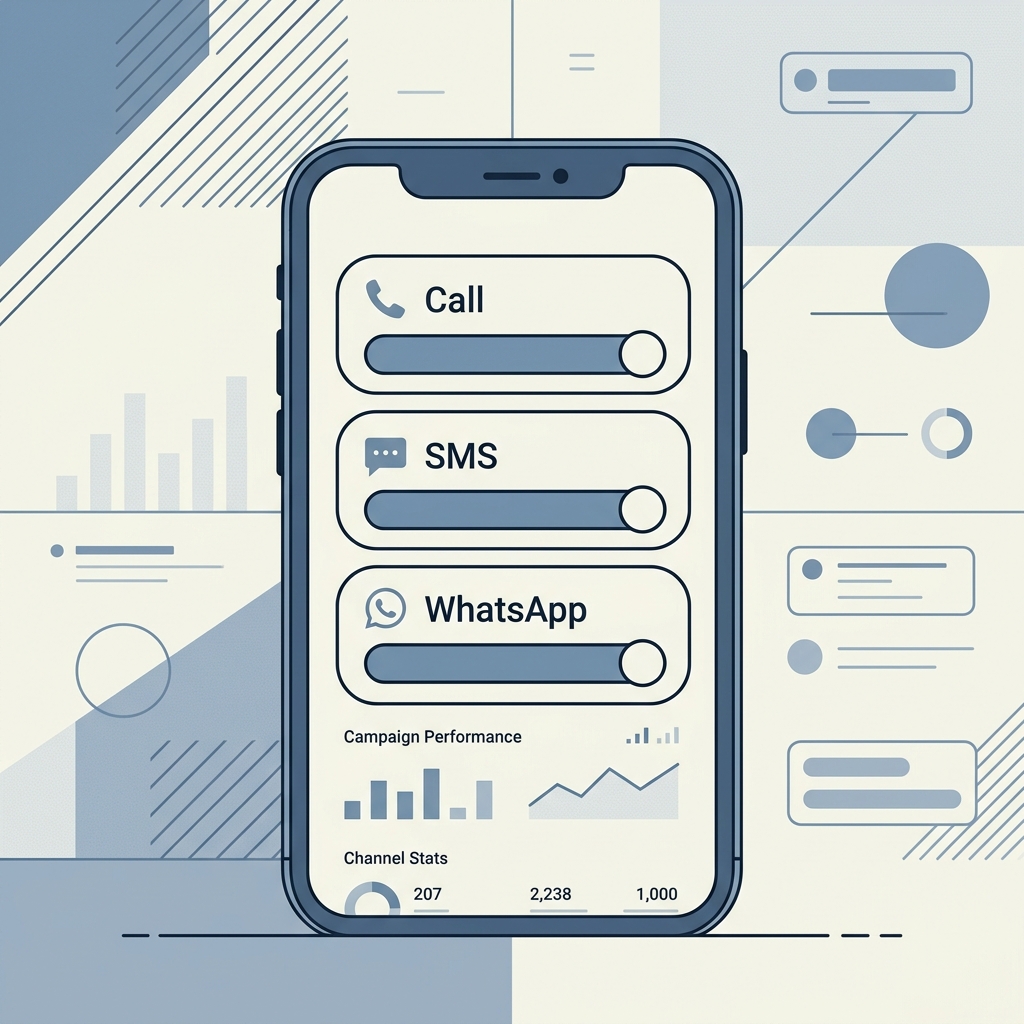
AdSense Settings
Google Just Added a Setting That Lets AdSense Experts Call You on WhatsApp - I Tested It From India
Google added a setting letting AdSense contact you by call, SMS, or WhatsApp. Here's what it means for Indian publishers - TRAI, DND, and scam risks explained.
Key takeaways
- Google's new opt-in Personalized Advice setting allows AdSense experts to proactively contact publishers via phone, SMS, or WhatsApp.
- In India, enabling calls or SMS overrides National Do Not Disturb (DND) registrations under TRAI's amended TCCCPR digital consent rules.
- Internet-based OTT platforms like WhatsApp fall outside TRAI's telecom network regulations, though WhatsApp Business enforces its own rules.
- Legitimacy of dashboard settings doesn't eliminate impersonation risks; verify all calls by requesting publisher-specific IDs or ad data.
Introduction
I almost missed this one.
On July 6–7, 2026, a marketer named Bruno Ramos Lara posted a screenshot on X of a new AdSense setting he'd been emailed about. Buried under Google AdSense - Account > Settings > Personalization > Personalized Advice, there's now a menu called Personalized Advice - and it lets you tell Google whether its "AdSense experts" can contact you with growth advice, and if so, through which channel: phone call, SMS, or WhatsApp.
That's it. That's the whole announcement. One X post, picked up by one search-marketing blog, and then silence. No AdSense help center deep-dive. No forum thread with fifty publishers comparing notes. No one who's actually gone through the flow and can tell you what happens after you click "yes."
I run SEOWebGrow, and AdSense is a monetization channel I'm building toward, not one I've been living inside for a decade - which is exactly why I wanted to dig into this properly before it becomes "common knowledge" that either turns out to be right or turns out to be a costly assumption. I'm writing this as I go through the process myself, from India, where the compliance questions around WhatsApp and SMS outreach are genuinely different from what a US or UK publisher needs to worry about.
If you've seen this setting appear in your own AdSense account and you're wondering whether to turn it on, this is the piece I wish existed before I made my own decision.
What This Setting Actually Is
Here's the plain description, stripped of speculation: Google has added a new personalization control that governs unsolicited outreach from AdSense - not the standard email newsletters or in-dashboard tips you already get, but direct contact from a human (or a human-branded team) offering account-specific advice.
You get three independent toggles:
- Phone calls - a voice call to the number on file
- SMS - text messages to that same number
- WhatsApp - messages through WhatsApp Business
Each channel can be turned on or off separately, which tells you something useful right away: Google expects people to want some channels and not others. That's not how spam typically works - spam wants every channel open. A setting this granular suggests Google built it to survive scrutiny, which is a mildly reassuring signal, though not proof of anything by itself.
Open Questions About Personalized Advice
What's still genuinely unclear, because Google hasn't published anything beyond the settings toggle itself:
- Who actually places these calls - in-house Google staff, a contracted BPO, or a regional partner agency (this matters more than it sounds, and I'll get to why)
- What "personalized advice" means in practice - AdSense policy compliance tips, revenue optimization suggestions, or upsells toward things like Ad Manager, header bidding partnerships, or paid audits
- Whether this is being tested on a specific publisher segment first (new accounts, accounts with recent RPM drops, accounts above a certain traffic threshold) or rolled out broadly
- Whether there's a way to see a log of who contacted you and when, the way you can review login activity
I searched extensively for anyone with a documented call log, transcript, or even a one-line "they called me and said X" - nothing exists publicly as of this writing. That's the gap this article is filling.
Why I'm Not Just Dismissing This as Spam
My first instinct, honestly, was suspicion. Publisher forums are already exhausted from a rough eighteen months - AdSense RPM crash and structural RPM declines down sharply across niches through 2025 into 2026, a January 2026 incident where publishers in Germany, France, and Spain saw overnight RPM drops of 60–90% that Google eventually attributed to a technical issue, and a broader structural shift as Google's own properties (Search, YouTube, AI features) now account for roughly 90% of its ad revenue, leaving AdSense's network a comparatively small slice. Into that environment, "Google will now call you with personalized advice" reads, at first glance, like exactly the kind of thing a scammer would love to exist.
But a few things pulled me back from dismissing it outright, using the same forum-level trust signals methodology I apply to content evaluation:
- It's opt-in, not opt-out, and it's granular by channel. Real Google product settings almost always ship this way - default off, explicit per-channel control. Aggressive telemarketing operations don't usually build you three separate toggles to make it easier to say no to two of them.
- It sits inside the authenticated AdSense dashboard, not an external link. You're not clicking through an email to "verify your settings." You're already logged into your real account, in a real settings menu, changing a real preference. That's a transition that respects real boundaries.
- Google has a history of advertiser and publisher outreach. The pattern of a Google-branded team reaching out with growth suggestions isn't unprecedented - it's just historically been initiated from Google's side without explicit dashboard settings first.
None of that proves the outreach will be useful. It just means the setting itself is very likely legitimate. Whether what comes through that channel is worth your time is a separate question - and one I'm testing.
The Part Nobody's Written About: What This Means If You're in India
This is where I think the existing single blog post covering this topic falls short, and where the real information gain sits (which we analyze with our Information Gain Finder).
If Google's AdSense team calls, texts, or WhatsApps an Indian publisher, that contact doesn't happen in a regulatory vacuum. It runs into India's telecom commercial-communication rules, and the rules aren't the same across the three channels Google is offering you.
Phone calls and SMS fall under TRAI (Telecom Regulatory Authority of India)'s TCCCPR 2018 / 2025 amendment framework. The Telecom Commercial Communications Customer Preference Regulations, first introduced in 2018 and amended again in 2025, govern promotional calls and texts sent over Indian telecom networks. The core mechanism is the National DND (Do Not Disturb) registry: if your number is registered on DND, promotional communications are supposed to be blocked from reaching you - with a real enforcement mechanism behind it, since the 2025 amendment tightened the threshold for action against a sender from ten complaints in seven days down to five complaints in ten days, and shortened the window operators have to act.
Here's the detail that actually matters for this decision: the 2025 amendment also clarified that explicit digital consent can override your DND registration for specific promotional communications from that specific sender, as long as the business can show clear, recent proof of that consent. By toggling on phone or SMS in the AdSense Personalized Advice setting, you are almost certainly creating exactly that kind of explicit, timestamped, in-account consent. If your number is on DND for everything else, this setting is a deliberate carve-out you're creating for Google specifically. That's worth knowing before you flip the switch, not after you're wondering why Google can suddenly reach a number that blocks everyone else.
WhatsApp Business (OTT classification) sits in a different, murkier category. TRAI regulates traffic over telecom networks; WhatsApp is an over-the-top (OTT) internet-based service, and TCCCPR does not directly apply to pure WhatsApp messaging the way it applies to SMS and calls, even though regulators have been consulting on extending similar oversight to OTT channels. In practice, WhatsApp Business enforces its own consent and template-approval rules independently of TRAI. Practically, this means: if you're trying to keep your number as quiet as possible and you only want to test this cautiously, WhatsApp is currently the channel with the least telecom-regulatory friction attached - but also the one where "who has access to my WhatsApp Business conversation history" is worth thinking about separately from spam law entirely.
What I did on my own settings: I enabled WhatsApp only, left phone and SMS off. That's a personal risk call, not a universal recommendation - if you run a larger publisher operation with a dedicated business line rather than a personal number, your calculation may reasonably be different.
The Security Question Nobody's Asking: Does This Make Scams Easier?
This is the angle that concerns me more than spam annoyance, and it's the one piece of existing Google documentation that I think every publisher should read before touching this setting.
Google's own AdSense help center has a standing page dedicated to suspicious calls and emails claiming to be from AdSense - because impersonation of AdSense support is already a known, active scam pattern. Google is explicit there: it will never ask for your password or other sensitive account information through an unsolicited call, email, or link, and if you're unsure whether a caller is genuine, you can use the Publisher ID verification method - asking them to provide your publisher ID, your list of sites or apps, or specific ad-unit performance details - information only someone with real access to your account could give you.
Now think about what this new setting does to that landscape. Before July 2026, "Google AdSense doesn't call publishers" was a simple, reliable rule of thumb - any unsolicited call claiming to be AdSense support was, almost by definition, suspicious. That rule just got more complicated. Once genuine Google outreach becomes a normal, expected thing for at least some publishers, the instinctive red flag of "wait, does Google even call people?" weakens for everyone, including publishers who never opted in. Scammers impersonating AdSense support don't need you personally to have enabled this setting - they just need the concept of "Google sometimes calls AdSense publishers now" to be plausible enough that you don't immediately hang up.
My practical takeaway, and what I'm doing myself: even after opting in, I'm treating every call or message as unverified until it passes Google's own verification test - the caller volunteering specific, non-public account details I can check, not me handing over information to confirm who they are. If a "Google expert" ever asks me to share a password, click a link to "verify" my account, or move money or ad placements urgently, that's an immediate hang-up regardless of what channel it came through or what this setting says.
Should You Turn It On? A Decision Framework, Not a Recommendation
I'm not going to tell you flatly to enable or ignore this, because the right call depends on your situation. Here's how I actually thought it through for SEOWebGrow, broken into the questions that matter:
Is your traffic and revenue large enough that a human review might catch something real? If you're running a handful of sites with modest traffic, a semi-automated advice channel is unlikely to say anything you couldn't get from AdSense's existing Optimization Tips page or Search Console. If you're closer to the pageview thresholds where ad-network options like Mediavine or Raptive start becoming relevant, a human conversation might genuinely surface something worth a call.
Is the number you'd give a personal number or a dedicated business line? This is the single biggest factor in how much risk you're taking on. A dedicated business number that you're comfortable exposing to marketing contact carries very different stakes than your personal WhatsApp.
Are you already fielding suspicious AdSense-related contact? If you've had scam attempts before, adding a legitimate-but-similar-looking contact channel into the mix makes it objectively harder to filter real from fake. In that case, I'd lean toward leaving all three off and relying on the dashboard's built-in suggestions instead.
Do you actually have unresolved AdSense questions a real person could help with? If your account is running fine and you don't have open questions, there's limited upside to enabling outreach you didn't ask for, even if it's harmless.
For what it's worth, WebmasterWorld's long-running AdSense forum threads through the RPM decline period show publishers repeatedly wishing they could get a real human at Google to explain what changed - that's the specific, unmet need this setting appears designed to address. Whether it actually delivers that, versus becoming a soft channel for upsells toward paid ad-tech partnerships, is exactly what I'm testing.
How to Find and Configure the Setting
If you want to check your own account:
Navigate to Account
Log into AdSense and go to Account.
Open Settings
Click Settings in the menu.
Go to Personalization
Open Personalization.
Configure Personalized Advice
Look for Personalized Advice and toggle your preferences for phone, SMS, and WhatsApp.
If you don't see it yet, that's not a sign anything's wrong - Google has a well-established pattern of rolling AdSense features out gradually rather than to every account simultaneously, and this appears to be following the same staged approach.
What I'm Watching Next
I've enabled WhatsApp contact only, on a dedicated number I use for SEOWebGrow's business communication, and I'm documenting whatever comes through - timing, content, whether it's genuinely personalized to my account or generic scripted advice, and whether it ever pushes toward a paid product.
[This is the point where a real practitioner account replaces speculation. As of publishing, I have not yet received contact through this channel - this section will be updated with the actual outcome, verbatim where relevant, once contact happens or once enough time has passed to conclude Google isn't reaching out to accounts at my traffic level yet.]
If you've enabled this setting and already heard from Google, I'd genuinely like to compare notes - drop what happened in the comments, because right now there's close to zero real data on this anywhere, and publisher-to-publisher information is the fastest way to fill that gap honestly.
Sandesh Kokad builds and writes SEOWebGrow, an SEO and AI-tools platform run solo on a Django / SQLite / Next.js stack. This post is based on changes made directly to SEOWebGrow's own content, not a general strategy overview.
Sources and references
These are the main primary sources behind the guidance and date-sensitive notes in this article.
Useful next steps on SEOWebGrow
Understand the ROI of building brand presence on forums for AI citations.
Learn the four structural signals that make forum content outrank standard blogs.
Verify your site's technical and content metrics against Google's approval standards.
Frequently asked questions
What is the AdSense "Personalized Advice" setting?
It's a new personalization control, spotted in AdSense accounts starting the first week of July 2026, that lets publishers choose whether Google's AdSense team can contact them proactively with account-specific growth advice, and through which channel: phone call, SMS, or WhatsApp.
Where do I find the Personalized Advice setting in AdSense?
Go to Account, then Settings, then Personalization, then Personalized Advice. The feature is rolling out gradually, so it may not be visible in every account yet.
Is the AdSense Personalized Advice setting a scam?
The setting itself, sitting inside the authenticated AdSense dashboard, appears to be a legitimate Google feature. However, publishers should verify any call or message by asking the contact to provide account-specific details like a publisher ID or ad unit data. Google has stated it will never ask for a password or sensitive account information through an unsolicited call or message.
Does enabling phone or SMS contact override DND registration in India?
It can. Under TRAI's 2025 amendment to the TCCCPR framework, explicit digital consent to a specific sender can override Do Not Disturb registration for communications from that sender, and enabling this setting is likely to count as that kind of consent for Google.
Does TRAI's DND registry apply to WhatsApp contact from AdSense?
Not directly. TRAI's TCCCPR regulations govern calls and SMS over telecom networks. WhatsApp is an over-the-top service and isn't currently covered by the same DND framework, though WhatsApp Business enforces its own separate consent rules.
About the author
Sandesh Kokad
Professional Software Engineer and Digital Marketing Specialist with 5 to 6 years of industry experience
Sandesh Kokad is a Full-Stack Software Engineer and the founder of SEOWebGrow. An ex-MIT student with deep expertise in Python, Django, and Cloud Architecture, he engineers data-driven infrastructure for modern search. As the architect behind SEOWebGrow, he actively builds the infrastructure that helps modern websites communicate seamlessly with AI search engines.